Applying ESG reporting principles to a real company—lessons from
Baraka Impact’s 2025 ESG Impact Report
Over the past year, the Institute has published extensive guidance on ESG reporting—how to plan a first report, how to communicate effectively, why starting with value beats starting with frameworks.
But guidance without grounding can feel abstract. This article bridges that gap.
I founded and lead both the CSR | ESG Training Institute and Baraka Impact, a company that sources premium shea butter and natural ingredients from women's cooperatives in Ghana. Running Baraka keeps my teaching, writing, and advisory work connected to the practical realities of actually implementing ESG in a small, operating business. Theory that doesn't survive contact with real operations isn't worth much.
So when Baraka completed its 2025 Social & Environmental Impact Report, I saw an opportunity: use it as a worked example of the principles we've been teaching. Not because the report is perfect—it isn't—but because it demonstrates how the guidance translates into actual documentation that real stakeholders read.
This isn't a case of promoting Baraka. It's a case of showing our work.
This article builds on earlier ESG reporting guidance. If you haven't read these, they provide the conceptual foundation:
What follows examines how these principles work in practice.
Read the full Baraka Impact 2025 Social & Environmental Impact Report
Most ESG reports are written for auditors. This one was written to be read.
The opening section states it directly: "This report is written to be read, not audited."
This report is written to be read, not audited.
That's not just positioning—it's a structural choice that shapes everything else. When your audience is customers, partners, and community members rather than compliance officers, you make different decisions about language, organization, and what you emphasize.
The Purposeful Beauty industry report, published by the Institute, examines how natural and organic skincare companies create competitive advantage through authentic sustainability integration. Baraka appears as a case study—not because I run both organizations, but because it demonstrates a model worth examining: where social and environmental practices aren't marketing overlays but operational foundations.
This isn't proof that ESG always drives revenue. But it is evidence that impact-integrated operations can create market advantage rather than just costs—which is central to what we teach.

Executive Summary – The complete story condensed, including key numbers and honest acknowledgment of what's still being learned.
How to Read This Report – A reader's guide that tells different audiences where to find what they care about.
Introduction – Frames the philosophy: earned income over charity, integration over bolt-on programs.
Environmental – Documents specific initiatives with honest constraints (eco-ergonomic roasters, waste-to-energy systems, pilot programs).
Social – Covers infrastructure investments, training programs, income generation, community facilities.
Governance – Explains how impact integrates into business strategy.
Key Impact Numbers – Separates confirmed figures from estimates with methodology notes.
SDG Alignment – Uses Sustainable Development Goals as reference, with tiered claims by strength of evidence.
What follows are specific choices from this report that other companies might adapt. These aren't prescriptions—every business context differs. But they illustrate how the principles from our earlier guidance can translate into actual report structure.
Most ESG reports assume linear reading. Readers won't do that.
"If you want the big picture, read the Executive Summary and Introduction. If you care most about environmental outcomes, start with the Environmental section. If you want clear numbers, Key Impact Numbers distinguishes confirmed figures from conservative estimates."
Why this matters: Different stakeholders want different things. An investor has different questions than a customer or community partner. Acknowledging this respects readers' time and increases the chance they'll engage with what's relevant to them.
For your report: Create a brief reader's guide early. Name your audiences and tell them where to find what they need.

One of the most credibility-building choices is explicit distinction between verified data and conservative estimates.
The "Key Impact Numbers" section presents two labeled categories:
The report states a principle worth adopting: "We prefer honest approximation to false precision."
We prefer honest approximation to false precision.
Why this matters: Stakeholders are sophisticated enough to know that not all data is equally solid. Pretending otherwise damages credibility. Acknowledging uncertainty actually builds trust.
For your report: Label your data sources. If something is an estimate, say so. If you're uncertain, acknowledge it. The goal is credibility, not impressive numbers.
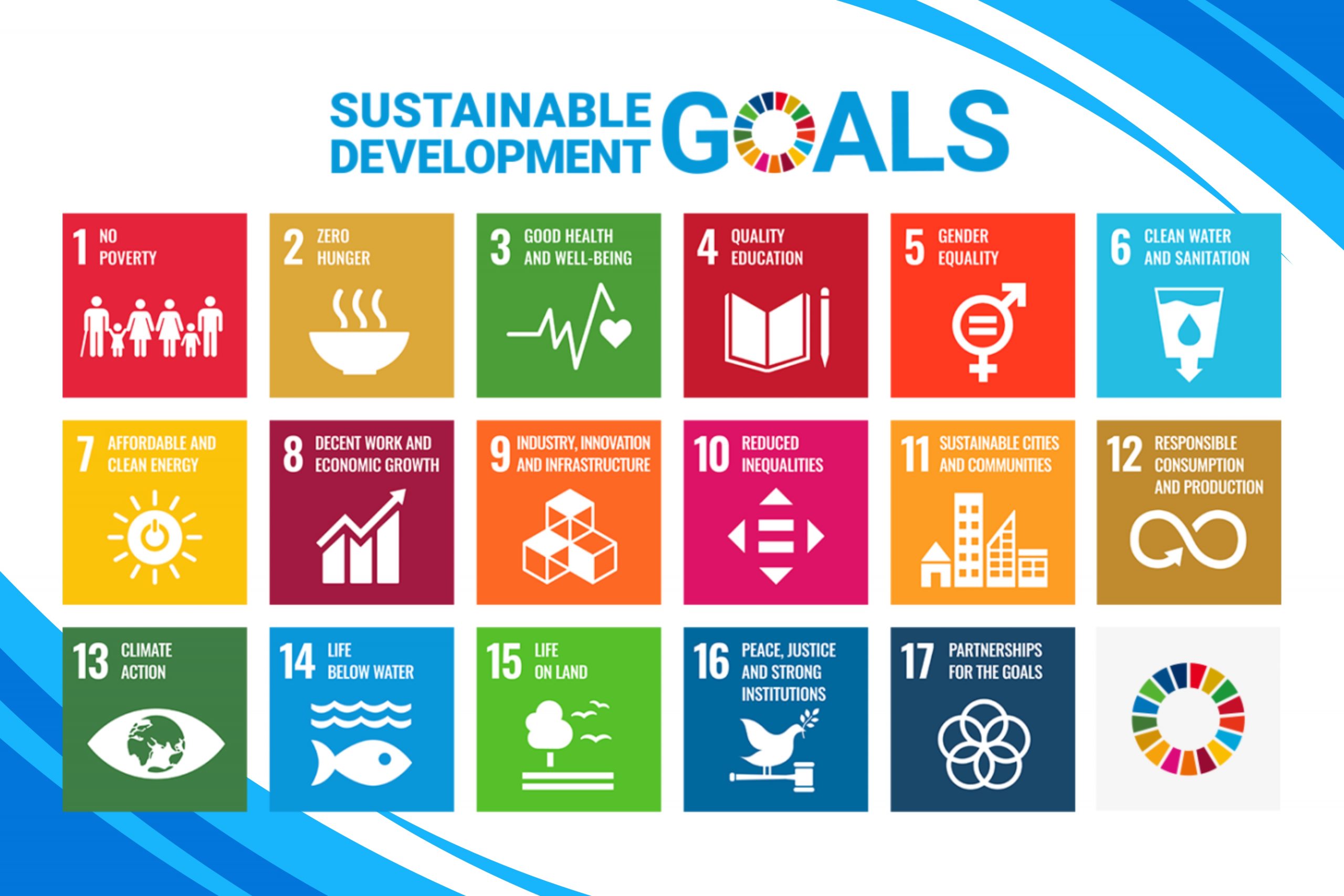
The report takes an uncommonly honest approach to the UN Sustainable Development Goals:
"For a company of our size, claiming broad SDG alignment would stretch credibility."
Instead of checking boxes across all 17 goals, it identifies three tiers:
| Tier | Count | Description |
|---|---|---|
| Significant Impact | 6 SDGs | Direct, demonstrable, material impact |
| Contributing Impact | 5 SDGs | Meaningful but secondary outcomes |
| Limited or Indirect | 6 SDGs | Some connection, but no credible claim |
Why this matters: Overclaiming is epidemic in ESG communications. Companies claiming alignment with 15+ SDGs strain credibility. Being selective about what you claim demonstrates honest self-assessment.
For your report: Identify where your operations create genuine, demonstrable impact versus where connections are tenuous. Claim less, but claim it credibly.
Throughout the report, a consistent philosophy: "Value Integration. Not Charity."
Value Integration. Not Charity.
This isn't just framing—it's structural. The report documents how:
The model is explicit: "Upstream investment in people and production ? Verifiable social & environmental practices ? Authentic stories and evidence ? Customer trust & wholesale partner value ? Stronger sales and reinvestment capacity ? More resources for upstream impact"
Why this matters: ESG activities positioned as charity are vulnerable—they're the first thing cut when budgets tighten. ESG activities integrated into operations sustain themselves because they create ongoing value.
For your report: Look for integration points. Where does social investment strengthen operations? Where does environmental improvement reduce costs? Document these connections explicitly.

The executive summary includes a section titled "Still Learning":
"We are not finished. We are still learning about seasonality, about scaling new initiatives, and about how to grow without losing what makes this work."
The environmental section acknowledges seasonal constraints on the waste-to-energy system. The mango butter pilot is described as genuinely experimental: "This is genuinely a pilot—we are learning as we go."
Why this matters: Perfect reports aren't credible. Stakeholders know that real work involves constraints, trade-offs, and ongoing challenges. Acknowledging them demonstrates authentic engagement rather than marketing polish.
For your report: Include honest acknowledgment of challenges, constraints, and areas for improvement. This differentiates your report from greenwashing and builds trust.
"This report does not assume prior ESG knowledge. It does not rely on jargon, complex scoring systems, or abstract frameworks. Instead, it documents what we did, why we did it, what it enabled, and where the limits are."
Terms like "materiality assessment," "double materiality," or "Scope 3 emissions" don't appear. Plain language throughout.
Why this matters: If your actual audience needs a glossary to understand your report, you've failed at communication. ESG reports written for ESG professionals exclude everyone else.
For your report: Write for your real audience. If customers, partners, or community members will read it, write for them. The goal is communication, not demonstrating technical sophistication.

Rather than relying solely on internal metrics, the report incorporates external validation:
Why this matters: Self-reported ESG claims are inherently suspect. External validation—whether from customers, partners, or third parties—transforms your report from assertion to evidence.
For your report: If you have customer feedback, survey data, partner endorsements, or any external validation that connects to your ESG activities, include it.
Based on this report and our broader guidance, here's a practical structure for small and mid-sized businesses:
Essential Sections
Principles to Apply

Not necessarily. Formal frameworks are valuable for companies with regulatory requirements or institutional investors demanding standardized disclosure. For most small and mid-sized businesses, starting with your value propositions and stakeholder needs is more effective. Add framework alignment later if required.
Length should match substance. The Baraka report is comprehensive because it documents substantial activities. If your ESG activities are more limited, a shorter report is more credible than padding. Some effective ESG communications fit on a single card with QR codes linking to details.
Use conservative estimates and label them clearly. The Baraka report explicitly distinguishes "confirmed figures from direct records" versus "estimates based on participation records and long-standing relationships." Transparency about data quality builds credibility.
Yes. Acknowledging what you're still working on, where constraints exist, and what didn't work as planned builds credibility. Stakeholders can distinguish between honest progress reports and marketing documents.
Look for integration points where social or environmental activities also strengthen operations, reduce costs, improve quality, attract customers, or create competitive advantage. Document these connections explicitly.
The guidance we've published on ESG reporting—start with value, communicate clearly, be honest about limitations—isn't theoretical. It emerges from actually doing this work.
Running Baraka alongside the Institute creates accountability. If the advice doesn't work in practice, it shows up in real operations with real consequences. The Baraka 2025 report isn't offered as a template to copy, but as evidence that these principles translate into actual documentation.
The most effective ESG reports aren't the longest or most framework-aligned. They're the ones that communicate clearly, acknowledge honestly, and demonstrate how impact integrates with operations.
If you're preparing your first ESG report, or improving an existing one, start with these questions:
The best ESG report for your organization is one that answers these questions—in whatever format and length serves your stakeholders.
Read the full report: Baraka Impact 2025 Social & Environmental Impact Report

The CSR | ESG Training Institute provides sustainability consulting and executive education globally. Visit the Knowledge Centre for more resources.


Wayne Dunn is the founder of the CSR Training Institute and CSR | ESG Institute. A former Professor of Practice in sustainability at McGill University, he is recognized as a global thought leader and pragmatic problem solver, frequently speaking on business, social responsibility, economics, and strategy at events worldwide.
He is an award-winning global sustainability expert with extensive teaching, writing, lecturing and advisory service experience. He is supported by an extensive faculty and advisory team.

“The Masterclass reinforced the importance of ESG and challenged me to articulate its value proposition.”
Ross Mitchell
Verdensure

Really Practical
‘…useful beyond expectation, has given me a clear perspective’
Leonard J. Mkude
Accountant General
United Republic of Tanzania

Just What I Needed “Pragmatic, strategic, and full of practical insights. Just what I needed.”
Gifty Owusu-Nhyira
ESG & Sustainability Coordinator
Ecobank West Africa

Thoughtful, Coherent, Insightful “Coherent, thoughtful, stimulating, insightful, and state-of-the-art! The network of public, private, and civil society participants was incredible. Some of the leading experts in the field.”
Kojo Busia
Snr. Mineral Sector Governance
Advisor,
United Nations Economic
Commission for Africa/UNECA

A Practical & Realistic Approach “Professor Dunn brings a practical and realistic approach to CSR and shared value, blending theory and practice to develop pragmatic approaches that address real-world challenges.”
Dr. Ellis Armstrong
Former CFO
BP Exploration

Demystified ESG, SDG & CSR “It demystified ESG, SDG, and CSR. Very simple and engaging learning.”
Robert Gyamfi
Head of Community Engagement
Future Global Resources

Leadership on SDGs & Business “The pedigree speaks for itself…Pragmatic and global thought leadership on aligning SDGs and business.”
Dr. Eugene Owusu
Special Advisor to the President
of Ghana on the SDGs


